CHECKLIST & FLOWCHART | OUTLINE | INDEX | Section 1 | Section 2 | Section 3 | Section 4 | Section 5 | REVIEW | QUIZ / CERTIFICATE |


Self-Study Guide:
Preparing Visually Impaired Students for Uncontrolled Crossings


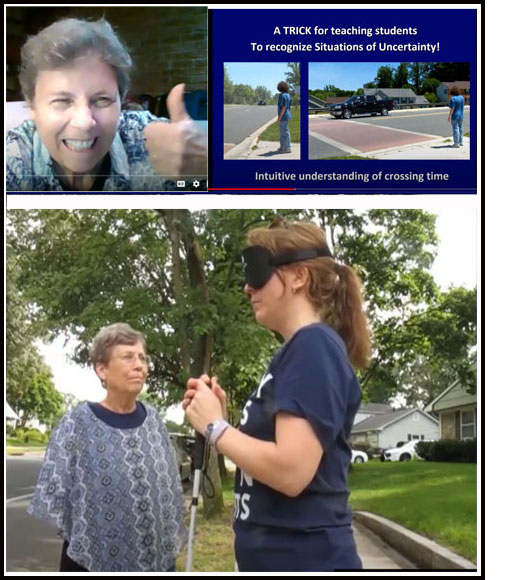
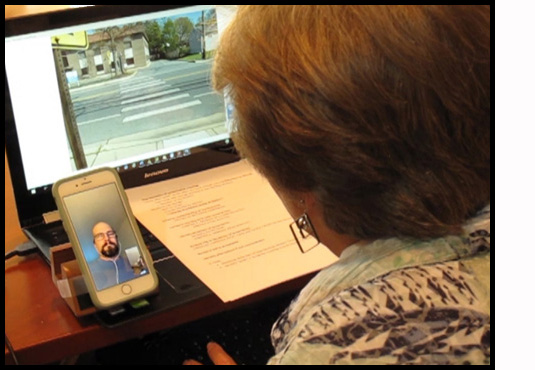
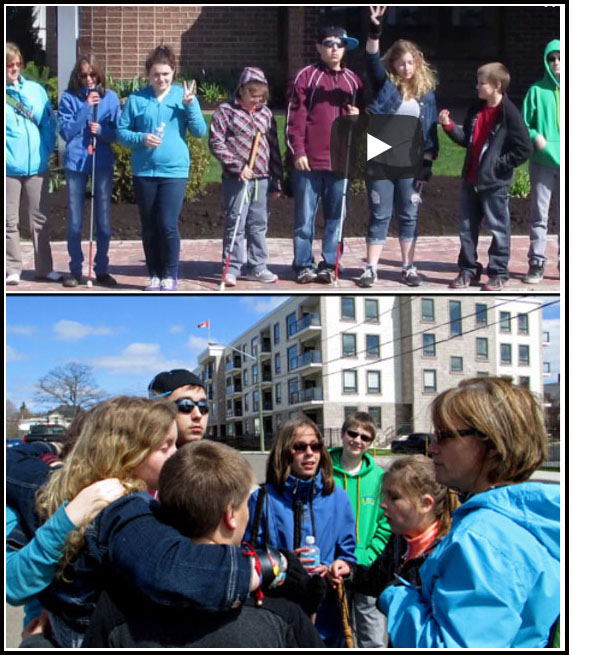
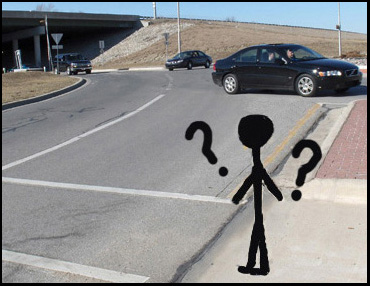
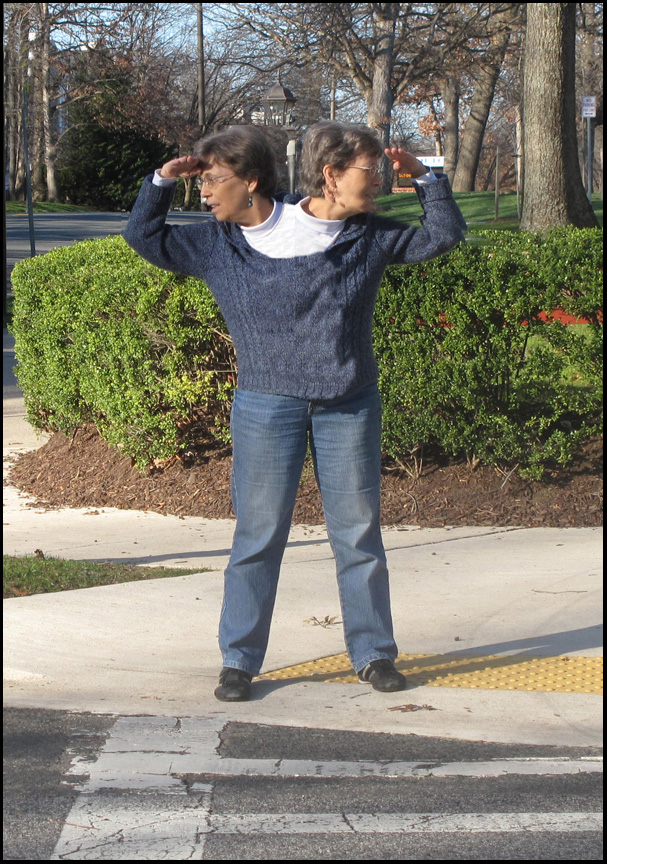
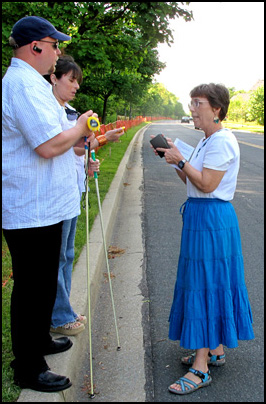
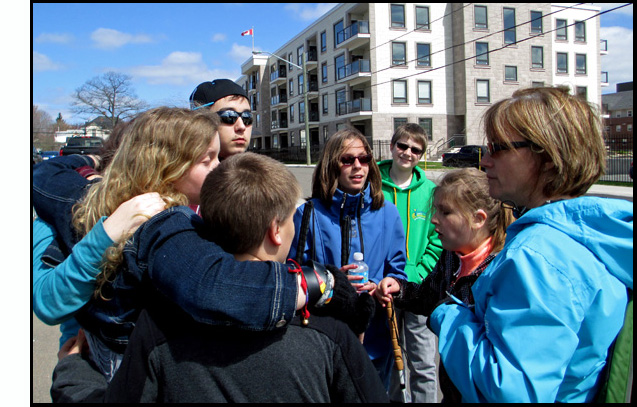
photo shows a stick figure with question marks around the head.  It is facing a crosswalk of two lanes -- about 20 feet to the right, cars are going around a roundabout -- it is unclear whether they will continue to circle the roundabout, or approach the crosswalk.   Photo shows a man standing at a corner facing a street.  there is a stopsign for the street beside him but not for the street he is facing.   Photo shows Dona with two heads, one looking to her left for approaching vehicles and another looking to her right. Photo shows Dona holding a small tape recorder and standing in the straight street talking to Paul and Jomania who are standing on the curb. Photo shows about a half dozen students on the sidewalk, gathered in a tight circle with their instructor -- some of them have their arms around each other.   Picture shows a screenshot from a zoom meeting with Dona and 3 participants who are each looking through a vision simulator or a funnel.

DEDICATED TO DICK AND LORRAINE EVENSEN,
whose deaths in 1987 alerted us to the insidious changes at crossings with no traffic control, such as Situations of Uncertainty,
AND GORDON PARKS, who was killed in 2010 while crossing in a Situation of Uncertainty.
May their memory inspire and remind us to prepare our students to assess and cross these streets safely.

Are you . . . a hands-on learner?
. . . or an experienced O&M wanting to update yourself?
Join innovative O&M practitioners as they wrap their heads around the new paradigm and try these strategies themselves in our
three-part webinar series (8 hours of free ACVREP credit):

Webinar series: Preparing Students for Uncontrolled Crossings

    Welcome -- enjoy your adventure through these pages!

      Hang onto your seat belt -- this Self-Study Guide is intended to help you prepare students for crossings with no traffic signal or stop sign ("uncontrolled crossings"), with information and strategies that have accumulated and been modified and refined during a journey of understanding that has taken more than 30 years. It was revised in July, 2021 and again in Fall, 2025.

    What should our students know for uncontrolled crossings?

      • They should know that the strategy "cross when quiet / all-clear" is reliable only when they have enough warning that vehicles are approaching.
      • They should know that they will find themselves either in a:
        • "Situation of Confidence" where they can be confident that if they start to cross whenever it's quiet/clear, they'll have time to finish, because if there had been an vehicle close enough to reach them when they started, they would have detected it.
          OR
        • "Situation of Uncertainty for gap judgment" where, even it it's quiet/clear when they start to cross, they may not have time to finish before a vehicle can reach them because in that situation, vehicles can get close enough to reach them without being detected (there is not enough warning of approaching vehicles).
      • They should be able to recognize Situations of Uncertainty and Situations of Confidence by being able to intuitively compare the warning times of a sample of approaching vehicles with their crossing time.
        • At Situations of Uncertainty, they need to analyze the risk of crossing, and use alternatives when the risk is not acceptable.
        • At Situations of Confidence, they need to know how to reliably determine crossable gaps in traffic (using specific listening or visual skills).

      Each of these is fully addressed in this Self-Study Guide, and there is a flow chart of skills and tasks at the beginning of Section 2.
      So if you're ready, let's get started!

    Self-Study Guide

      The Self-Study Guide has 5 sections:
      • Section 1: Introduction to Crossings with No Traffic Control (research; best practice)
          What are uncontrolled crossings, what strategies can we use to cross them, and how can we recognize when the strategy "cross when quiet" is reliable vs. when we are in a "Situation of Uncertainty"?
      • Section 2: Teaching students to recognize Situations of Uncertainty [revised July, 2021 and Fall, 2025]
          How can we teach students to recognize Situations of Uncertainty for gap judgment?
            (intuitive understanding of crossing time; comparing warning time of approaching vehicles with crossing time; flow chart for analyzing situations)
      • Section 3: You are in a Situation of Uncertainty -- What Now?
          What to do when you are in a Situation of Uncertainty?
            (analyzing risks; making decisions; considering what is "safe," and using alternatives)
      • Section 4: Teaching students to determine when there is a crossable gap in traffic
          When they are in Situations of Confidence, teaching students to determine when they have time to cross
            (learning the effect of masking sounds; scanning for traffic; judging the speed and distance of vehicles)
      • Section 5: Applications! Vignettes, Frequently Asked Questions, and Workshop Suggestions
          Case studies (vignettes), frequently asked questions, "freaky findings" and workshop suggestions

    Helpful links

      At the top of every page in the Self-Study Guide is a navigation bar with the following links:
      • Section (#?) (in the top left corner) links to a list of the contents of each page in that section.
      • Self-Study Guide has a link back to this page.
      • OUTLINE links to a table of contents for the Self-Study Guide, listing the topic for each page.
      • INDEX has an alphabetized list of topics from Sections 1-4, and links to find them.
      • CHECKLISTS are cheat-sheets for teaching students and using the procedures
      • REVIEW has study questions covering all the essential information.

      Additional link in the navigation bar at the top of the first page of each Section is:
      • QUIZ/CERTIFICATE explains how to take the quiz and earn a certificate of completion.

      NOTE:   MANY LINKS are provided for additional information that is not necessary for understanding this course. You are encouraged to skip the links unless you are curious or want to know more.

    Testing your understanding -- a learning tool!

      The Self-Study Guide has a quiz designed to indicate which areas you need to review further. For more information about the quiz, click here. To get the code needed to take the quiz, contact me.

    Certificate of Completion and ACVREP Credit

    Ready? Let's begin!

      To start the Self-Study Guide, click below on the link labeled "NEXT" -- enjoy!